Headlight Restoration
Headlight lenses turn yellow and cloudy over time from UV exposure, road salt, and years of washing, and Long Island's combination of coastal sun and winter road treatment speeds that up. That haze does not just look bad, it actually cuts down how much light reaches the road at night, which matters for how well you can see and how well other drivers can see you.
We wet sand out the oxidation, polish the lens back to clear, and finish with a UV-resistant sealant to slow the yellowing from coming back. Most vehicles take about 45 minutes to an hour for both headlights, and it can be added to any detailing appointment or booked on its own.
Every time a headlight gets restored, a thin layer of the lens material comes off with the oxidized plastic. That is not a flaw in the process, it is how the process works. Each proper restoration removes only a small amount of material, but the polycarbonate lens is not unlimited, so there is a real limit to how many times it can be done. In practice most headlights can be restored several times over the life of the car before there is nothing left to sand down to. We keep this in mind during the assessment so we are not selling a service that will not hold.
There is a real difference between a hazy lens and a damaged one, and it matters for what we recommend. If the plastic is intact and the fog is just UV oxidation sitting on the surface, restoration brings it back to near-new clarity. If the lens is cracked, chipped, or the housing seal has failed and let moisture inside, sanding the outside will not fix that, and a restored lens on a bad seal will cloud right back up within weeks as condensation forms behind the glass. We will tell you straight if that is what is going on instead of charging you for a service that will not last.
The actual sanding is done in stages, starting with a coarser grit to knock down the oxidized layer and working up through progressively finer grits before polishing. Skipping steps to save time is how you end up with a lens that looks clear in the shop but shows fine scratch patterns in direct sunlight a week later. We do not shortcut the grit progression, which is part of why the job takes the better part of an hour rather than fifteen minutes.
Removes yellowing, oxidation, and cloudiness from headlight lenses
Improves nighttime visibility, not just appearance
UV-resistant sealant applied afterward to slow oxidation from returning
Can be added to any detail or booked as a standalone service
Real Headlight ResultsDrag to compare

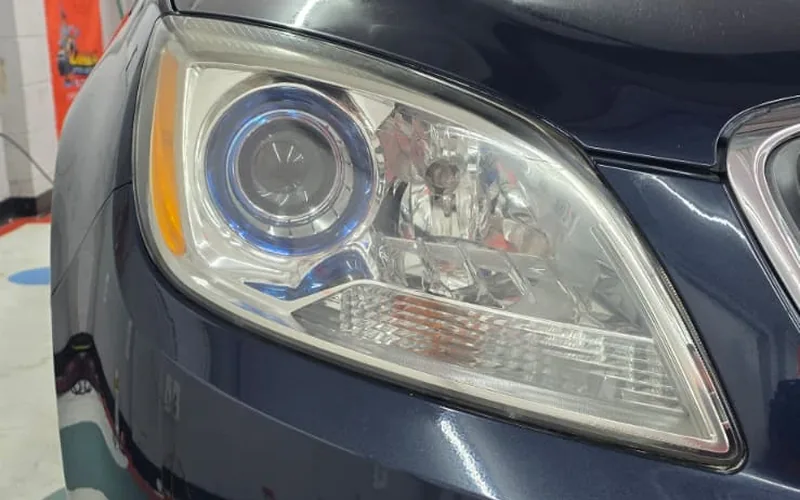
This lens was cloudy and yellowed from oxidation. Wet sanding, polishing and a UV seal made it clear again.
A multi-stage process that removes the damaged outer layer of the plastic lens, then polishes it back to a clear, glass-like finish.
Restoration fixes yellowing and oxidation, not cracked housings or moisture trapped inside the lens. We'll tell you upfront if your headlights are a good candidate before we start.
Frequently Asked Questions
How long does headlight restoration actually last here?
Typically a year or more, though Long Island's coastal sun and road salt can shorten that versus a garage-kept inland car. Keeping up with the sealant refresh extends it.
Can you tell before starting if it's too far gone to restore?
Yes. Deep pitting, cracks, or moisture fogging the inside of the lens are signs restoration will not fully fix it and replacement is the better call. We'll always tell you honestly rather than charge for a service that will not hold up.
Does restored headlight clarity affect a NY state inspection?
Clear, properly aimed headlights are part of what inspection checks. Restoration addresses the haze itself, we're happy to make sure your lights look right before you go in.
Will this actually improve my night driving?
Yes. Cloudy, oxidized lenses scatter and block light. Restoring clarity lets your headlights put more usable light on the road instead of scattering it inside a hazy lens.
How many times can my headlights be restored before they need to be replaced?
There is no fixed number since it depends on how deep the oxidation runs each time, but because every restoration removes a small amount of lens material, there is a limit. Most headlights can handle multiple restorations over their life. Once the plastic gets too thin or starts showing stress cracks from sanding, we will tell you it is time to look at replacement instead of doing another round.
Will restoration fix headlights that are cloudy on the inside, not just the outside?
No, and this is worth knowing before you book. If the fog is on the outer surface, which is by far the most common cause, restoration solves it. If moisture has actually gotten inside the housing through a failed seal, that is a sealed unit problem, not a surface problem, and polishing the outside will not touch it. We check for this during our assessment and will not recommend restoration if that is what is happening.
Testimonials
Hear from Our Customers
 Google

