Ceramic Window Tint
Ceramic film is the highest performing window tint we install. Its nano-ceramic particles block far more infrared heat than dyed film, without any metal content, so it will not interfere with GPS, radio, phone signal, or your E-ZPass transponder the way older metallic film sometimes did. It blocks up to 99% of UV rays and holds its color for years instead of fading to purple like cheap dyed film eventually does.
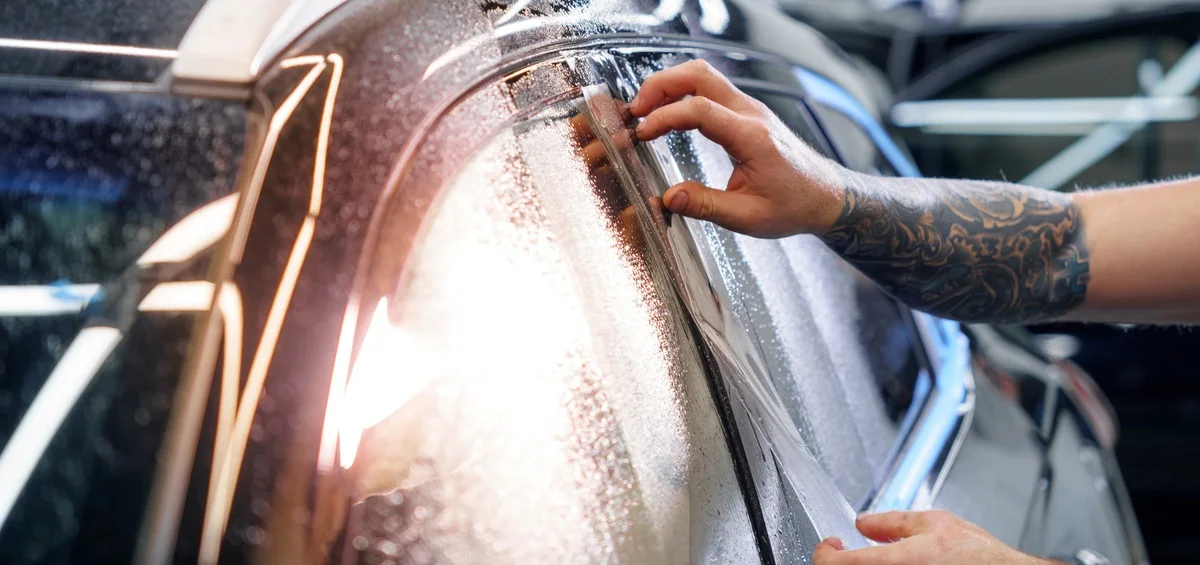
Every install is cut by hand to your vehicle's exact windows, kept within New York's legal tint limits, and finished with a short cure time before you roll the windows down. Every install happens at our Islip Terrace shop, where we control for dust and temperature during the cure.
Ceramic film's performance comes down to the nano-ceramic particles themselves, which are non-conductive and reflect infrared wavelengths rather than absorbing them the way dyed film does. In practical terms, a quality ceramic film blocks somewhere in the 80 to 98 percent range of infrared heat depending on the film line, which is why a ceramic-tinted cabin stays noticeably cooler even at a lighter, more legal VLT percentage. Dyed film, by contrast, absorbs heat into the film layer itself, which is part of why it fades and can even radiate heat back into the cabin over time.
There are two separate warranties at play on any ceramic install, and it is worth knowing the difference before you buy. The film manufacturer's warranty covers defects in the material itself, things like color shift, bubbling, or delamination that show up because of a bad batch. The installer's workmanship stands behind the cut, the edges, and the heat-shrinking around curved glass, things that go wrong from a rushed or sloppy install rather than a film defect. We back both on every job.
Blocks more heat than dyed film, keeping your cabin noticeably cooler
No metal content, so no interference with GPS, phone signal, or E-ZPass
Blocks up to 99% of UV rays and resists fading or turning purple over time
Installed within New York's legal VLT limits, front and rear
Front side windows are installed at 70% VLT or lighter per NY law. Most sedans, coupes, and hatchbacks also need 70% on the rear side windows, though SUVs, vans, and pickups have more flexibility there, and rear windows can often go darker if your vehicle has dual side mirrors. We'll walk you through exactly what applies to your vehicle before we install anything.
Ceramic film has no metal layer, so unlike some older metallic tints, it will not interfere with GPS, phone signal, or your E-ZPass transponder.
Frequently Asked Questions
Will ceramic tint interfere with my GPS, phone, or E-ZPass?
No. Ceramic film has no metal content, so unlike older metallic dyed film, it does not block or interfere with GPS, phone signal, or E-ZPass transponders.
Is ceramic tint legal in New York?
Yes, when installed at the correct darkness. NY requires at least 70% VLT on front side windows (and on rear side/rear windows for sedans, coupes, hatchbacks, and convertibles). Rear windows can often go darker if your vehicle has outside mirrors on both sides. The windshield itself cannot be tinted below the legal top strip at any darkness, that strip is addressed on our Windshield Tint Strip page. We install to the correct limit for your exact vehicle type, and reflective or mirrored film is never legal anywhere on the car.
How soon can I wash my car or roll down the windows?
We'll give you an exact timeline for your install, but plan on avoiding rolling the windows down for a few days and holding off on washing the tinted glass for about a week so the film cures and bonds properly.
Ceramic vs dyed, what's actually different?
Dyed film is the most affordable but fades fastest and blocks the least heat. Ceramic blocks the most heat and UV, holds its color the longest, and has zero signal interference risk. We'll help you pick based on your budget and how long you're keeping the car.
How dark can I legally go on my windows in New York?
Front side windows have to let at least 70% of light through, checked during your annual state inspection since 2017. Rear side windows and the rear window can go darker than 70% only if your vehicle has two outside mirrors, one on each side; if it doesn't, the same 70% minimum applies there too.
What's the difference between paying for cheap tint and paying more for ceramic?
Entry-level dyed film is the cheapest option but typically carries only a few years of warranty coverage before fading or turning purple, since the dye itself breaks down under UV. Ceramic film costs more upfront because the particles resist UV degradation and heat stress for years longer, which is why most ceramic lines carry lifetime warranties against fading, bubbling, and delamination rather than a 3 to 5 year window.
Testimonials
Hear from Our Customers
 Google

