Ceramic Coating vs Wax: What Is the Real Difference?
19
Sep
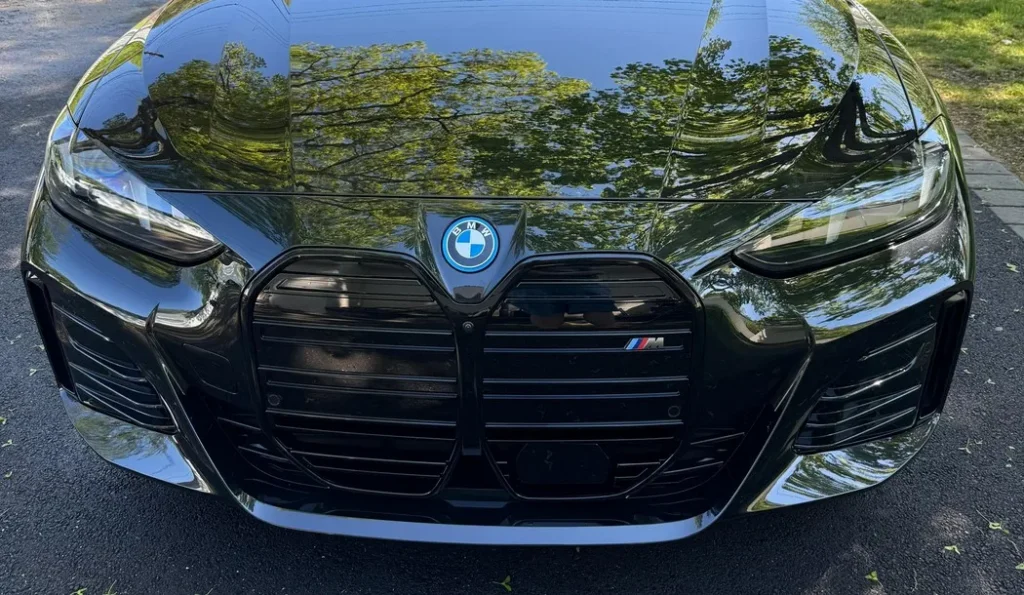
A layer of spray wax or sealant on a car measures 4.5 to 7.8 nanometers thick in the only peer reviewed measurement we could find; a professional ceramic coating goes on at 1 to 2 microns per coat, which is 130 to 440 times thicker. That number explains the difference: wax is a sacrificial film gone in weeks, a coating is a cured glass like layer that lasts years. It does not say whether you should buy one. A coating is $699 to $1,399 at our shop, a sealant is included in a $239 Exterior Shine, and the right answer depends on how long you keep the car, whether it is leased, where it parks, and whether the paint underneath is worth protecting yet.
Jump to a Section
- ›Four Kinds of Protection, Not Two
- ›Thickness, Chemistry and Why Wax Melts
- ›What 9H Means and Does Not Mean
- ›What a Coating Actually Does for You
- ›How Long a Coating Really Lasts
- ›The Warranty Fine Print
- ›Long Island Prices and the Five Year Math
- ›Correction Is the Real Cost
- ›Why Coating Is Shop Only on Long Island
- ›When Wax Is the Smarter Buy
Four Kinds of Protection, Not Two
“Ceramic vs wax” is the question people type, but the market sells four things, and the two in the middle are where most of the value lives.
| Tier | What it is | Typical life | Applied where | At Guinea Pig |
|---|---|---|---|---|
| Carnauba wax | Natural palm wax, hand applied | 4 to 8 weeks | Driveway or shop | Hand applied finishing wax in Paint Correction & Wax (from $799) |
| Synthetic sealant | Polymer film, hand applied | 3 to 6 months | Driveway or shop | Exterior Shine ($239); hand applied sealant |
| Spray ceramic or graphene sealant | SiO2 or graphene spray, wiped on | 6 to 12 months | Driveway or shop | Graphene Seal add on ($59), rated 6 months or 30 washes |
| Professional ceramic coating | Cured silica layer over corrected paint | 2 to 7 years by tier and care | Shop only | 3 Year $699, 5 Year $899, 7 Year $1,399 |
The third tier is the one most people have never been offered. Britain’s Auto Express left a dozen spray ceramics on a scrap hood outdoors for six months with basic shampoo washes every few weeks, and its 2026 winner cost about £40; a £9 product “wasn’t far off the best,” and a carnauba wax with ceramic additives rated for four months “was outperforming many of them at the end.” That is why our Graphene Seal is $59 rather than $300, and also why a spray is not a coating: the same test found “even the best were shifting water more slowly than in the first few weeks,” and some had disappeared.
Thickness, Chemistry and Why Wax Melts
Carnauba wax comes from the leaves of a Brazilian palm and melts at 180 to 187 degrees Fahrenheit. A dark hood in July sun can exceed that, so the wax softens and migrates long before it “wears off,” which is why the honest carnauba figure is weeks, not months.
Thickness is the fact nobody in this business cites. Researchers at the University of the West of Scotland measured four spray waxes and sealants with ellipsometry after application per the label and published the results in Acta Physica Polonica A (2009): residual films of 44.9 to 77.6 angstroms, which is 4.5 to 7.8 nanometers, with water contact angles from 71 to 95 degrees. CarPro states its CQuartz UK 3.0 coating at “1~2 micron per coat,” 70 percent silica, with a 110 degree contact angle and 2 to 5 years of durability. A micron is a thousand nanometers; paste waxes were not in the study and likely leave a thicker film than sprays, but nothing close to that.
Contact angle is the number behind “beading.” Above 90 degrees a surface is hydrophobic; wax sprays land around that line, coatings at 110 to 118 degrees, and the better ones advertise a low sliding angle so water runs off a parked car instead of drying into a spot. No car product reaches the 150 degrees chemists call superhydrophobic, whatever the label says.
What 9H Means and Does Not Mean
Our old version of this post repeated the line that “9H is roughly Mohs 2 to 3.” That conversion is folklore. The H scale is pencil hardness, an ASTM test in which a technician drags pencils of increasing hardness across a coated panel until one scratches; IGL Coatings explains that the test starts at 10H and steps down, and that it is “just one of the many different tests” a coating faces. Mohs is a mineral scale. They do not convert.
FeynLab’s chemist goes further in an article titled “Am I being fooled?“: a coating a few microns thick cannot resist a pencil on its own, so the test mostly measures the panel underneath, and lab certifications typically use coated steel plates, which return 9H, the maximum the standard allows. His tell: a true 9H surface would scratch glass, and your coated hood can be marked with a fingernail. What a coating resists is wash marring and chemicals, not keys, rock chips or a tunnel brush. A Tesla forum member with years of coated cars put it plainly: “it is in no way scratch proof … The key is prep.”
What a Coating Actually Does for You
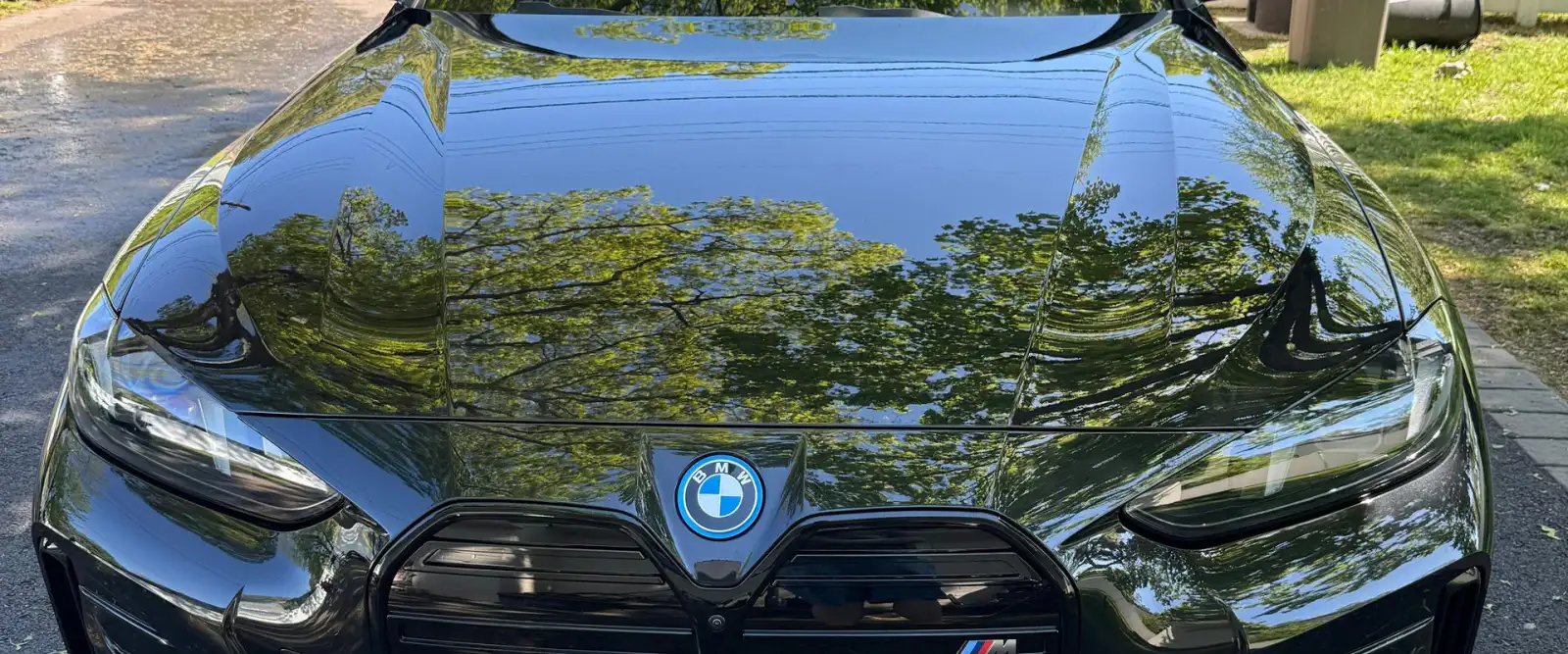
Three things. Washing gets easier and safer: dirt sits on the slick surface rather than bonding to it, so the paint picks up fewer swirls over a year of washes. Chemical attacks get time: bird droppings run a pH of about 3 to 4.5 and can etch bare clear coat in minutes on a hot day; on a coating they sit on top for hours, though not days. And gloss holds, because UV and oxidation work on the coating rather than the clear coat.
What it does not do is the list from the forums. It does not add measurable resale value. It does not keep the lower body clean (“your car still gets dirty below the waistline”). It does not stop chips, which is paint protection film’s job, a product we do not sell. And it does not make water spots impossible; an Autogeek member hosed bird droppings off a freshly coated car, let it air dry, and ended up with “water spots all over my car.” A coating buys time against contamination. It does not replace drying the car.
How Long a Coating Really Lasts
The number on the package is a warranty term, not a promise of day one beading for that many years. Owners who have been through several coatings are consistent about this. On Autogeek, a long time member wrote in 2023: “My general rule of thumb is I don’t go more than 2~3 years on any coated vehicle before I polish it off and re-apply … at the three year point you can tell it’s time.” Another owner reported a coating applied “4-5 years ago … car still beads to this day.” Both are true: the coating is there at five years, and it stopped performing like new around year three. The maker of the coatings we use, Artdeshine, recommends a maintenance spray every six months, which is what keeps the top of the curve up.
Long Island shortens the curve in specific places: winter brine on rockers and lower doors, where every coating wears first; oak pollen in April and May, which rinses off a coated surface and sits on bare paint; and a UV index that hit 9 on June 30, 2026. Cars that live outdoors near the South Shore should expect the lower end of any rating, garaged cars inland the upper end.
The Warranty Fine Print
Most professional coatings carry a manufacturer warranty that few people read. One readable example, NANOLAB, requires weekly washing with pH neutral shampoo and microfiber, professional maintenance twice a year, contaminants removed “within 12-24 hours,” a record of wash and maintenance services for any claim, and states that “failure to adhere to the maintenance schedule will void the warranty.” Exclusions run to “minor scratches and swirl marks” and “extreme UV exposure.” A detailer’s guide to coating warranties lists what typically voids them across brands: automatic brush washes, dish soap or degreasers, letting bird droppings sit, pressure washing at point blank range, missing inspections, and failing to register. The remedy, when a claim is honored, is almost always a reapplication, not a refund.
So a “7 year” coating is a 7 year warranty on a product that will perform best for two to three years and acceptably after that, provided you wash it every week or two, top it twice a year and never run it through a brush tunnel. If that routine sounds like more than you will do, buy the cheaper tier, or buy a sealant.
Long Island Prices and the Five Year Math
We read the published ceramic prices of six Nassau and Suffolk shops on October 11, 2026; several of the biggest publish none. The spread is wide because the correction underneath varies more than the coating. A Westhampton film shop lists an entry coating at $599 for a car and $799 for a truck, rising to $1,999 to $2,499 with heavy correction. A Bayport detailer lists a 3 year single layer at $1,395 to $1,595 and a 5 year double layer at $1,795 to $1,995, tax included. A Merrick mobile coater lists $850 to $1,500 with correction from $600. A New York City directory puts the range at $500 to $800 for prep only, $1,000 to $1,500 with single stage correction, and $1,500 to $2,500 and up for multi layer packages.
| Service | Sedan | SUV | Truck or large SUV | What it includes |
|---|---|---|---|---|
| 3 Year Ceramic (Artdeshine Graphene Hybrid+) | $699 | $899 | $1,099 | Paint, trim and wheel faces; rated 2 to 3 years, 15,000 miles |
| 5 Year Ceramic (Artdeshine Ayicon Pro+) | $899 | $1,299 | $1,499 | Our most requested tier; rated 5 years, 40,000 miles |
| 7 Year Ceramic (Artdeshine NGC+) | $1,399 | $1,599 | $1,799 | Foam wash, multi stage decontamination, light paint correction; paint, wheel faces, plastics, front windshield |
| Elite Detail (single stage polish, coating prep) | $525 | $605 | $675 | Mobile or shop; the correction most cars need before the 3 or 5 Year tier |
| Exterior Shine (hand applied sealant) | $239 | $269 | $299 | Mobile or shop; 3 to 6 month protection |
| Graphene Seal add on | $59 | $74 | $79 | 6 months or 30 washes; the maintenance topper for coated cars |
The five year comparison, using only those figures. Sealant route: an Exterior Shine two or three times a year is $2,390 to $3,585 over five years. Coating route: a 5 Year Ceramic at $899 plus a $59 Graphene Seal topper twice a year is $1,489. Both still need the same washes. The coating wins if you keep the car five years and keep up the toppers; the sealant wins if you keep it two, and the break even on a sedan is roughly year two to three. Sales tax: detailing and coating are taxable in New York, so add 8.75 percent in Suffolk County to every number above, a point covered in our Long Island detailing cost guide.
Correction Is the Real Cost
A New York Audi owner pricing a coating got the best one line summary of this business from another forum member: “any detailer who quotes a ceramic coating package that doesn’t include paint correction should be ashamed.” A coating is clear. It locks in whatever is under it, swirls included, for years, and cannot be polished without removal. The gloss in a coated car’s photos comes from the correction, not the bottle, which retails for $115 to $160; the price of a coating is labor on the paint. Our 7 Year tier includes a light correction; the 3 and 5 Year tiers assume paint in good condition or an Elite Detail first, and we tell you at the walk around which one your car needs rather than coat over swirls.
This is also the difference between a detailer’s coating and the “ceramic package” on a dealer’s finance menu, which owners on truck and Tesla forums call “almost 100% profit” and applied without correction. A coating with documented prep, applied in a shop at a published price, is a different product with the same name.
Why Coating Is Shop Only on Long Island
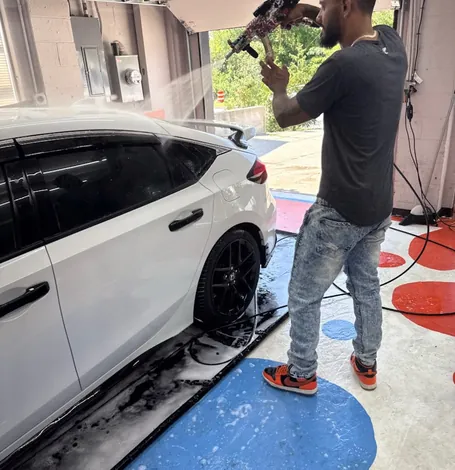
We wash and detail in driveways year round, including one customer’s car at 29 degrees in February 2026. We do not coat in driveways at all, and the reason is in the product sheets. CarPro specifies 40 to 90 degrees for application and a dry surface for at least an hour, ideally 24. Gtechniq’s Crystal Serum Light specifies 5 to 25 degrees Celsius, 41 to 77 Fahrenheit, and that the car be “indoors and can stay indoors for 12 hours after application.” Dr. Beasley’s says a coating “simply will not bond properly under 50°F,” and that cold air’s humidity “can trap moisture under the coating and cause haze, streaking, or early failure.” Installer guidance is 60 to 75 degrees indoors, humidity under 50 percent, and no washing, rain or road salt for seven days.
Islip’s mean high is 39 degrees in January and 44 in December, so every one of those products is out of its window outdoors for a third of the year, and dust control in a driveway is impossible in any month. So ceramic coating is done at 170 Garfield Avenue, takes most of a day, cures for 7 to 14 days, and you pick the car up with written care instructions. A sealant, by contrast, is a 2 hour mobile job from April to mid November and shop work in the cold months; the full calendar is in our post on how often to detail a car on Long Island.
When Wax Is the Smarter Buy
There are real cases where we will talk you out of a coating.
- A lease. Forum advice is nearly unanimous and we agree: “If you’re leasing and giving it back, I wouldn’t ceramic coat it.” A $59 Graphene Seal twice a year does the job for the term of the lease.
- You keep cars two years or less. The math above never reaches break even.
- The paint is already swirled and you do not want to pay for correction. A coating would seal the swirls in. An Elite Detail polishes them out and a sealant protects the result for a season; decide about coating next spring.
- You will not keep up the washes. A coating that goes through a brush tunnel every two weeks is a voided warranty on a car that looks uncoated.
- You like the ritual. A Saturday wax is a hobby, and a hobby is not a cost.
The case for a coating is the mirror image: you keep cars five years or more, the car lives outside, you wash it every week or two anyway, and you want that washing to be easier and safer for the paint. For that owner the 5 Year Ceramic at $899 is the best value in our catalog, and the wash it needs afterward is the same hand wash we do for everyone else.
How we know this: the film thickness and contact angle figures are from the 2009 Acta Physica Polonica A study; coating specifications are from CarPro, Gtechniq, Adam’s, IGL and FeynLab; durability tests are Auto Express; warranty terms are quoted from published programs; competitor prices were read from six Long Island shops’ published pages on October 11, 2026; Guinea Pig prices are the live booking catalog as of October 2026; and the owner quotes are from public forum posts, linked above or named by forum and date.
Is a ceramic coating just an expensive wax?
In function, it is a wax that lasts years instead of weeks: easier washing, fewer swirls from washing, time against bird droppings and UV. In substance it is different, a cured silica layer 1 to 2 microns thick versus a wax film measured at 4.5 to 7.8 nanometers. It is not armor; it will not stop chips or keys.
Should I ceramic coat a leased car?
No. You will not keep the car long enough to reach break even, and the paint correction is the expensive part. A Graphene Seal add on at $59, reapplied every six months, gives a leased car the washing benefits for the length of the lease.
What does 9H actually mean?
It is the top of the pencil hardness scale, a test that drags graded pencils across a panel. On a film a couple of microns thick the test mostly measures the panel underneath, which is why lab certifications use steel plates. It does not convert to the Mohs mineral scale, and a 9H coating can still be marked with a fingernail.
Why did my coated car get water spots?
Because minerals in water dry on a coating the same way they dry on paint. The usual story is a hose rinse that was allowed to air dry. A coating gives you hours against contaminants, not days; rinse, then dry with a towel or blower, and remove bird droppings within a day.
Can I take a coated car through an automatic car wash?
Brush tunnels are the first item on most coating warranties’ list of what voids coverage, and they put in the swirls the coating was meant to prevent. Touchless washes are less harmful but their strong chemicals shorten the coating’s life. A two bucket hand wash every week or two is what every coating maker specifies.
Do I need paint correction before a coating?
Almost always, unless the car is new or recently polished. A coating seals in whatever is under it for years and cannot be polished without removal. Our 7 Year tier includes a light correction; for the 3 and 5 Year tiers most cars need an Elite Detail ($525) first, and we tell you which at the walk around.
If you want a straight answer for your car, tell us the year, how long you plan to keep it, and where it sleeps, and we will say coating, sealant or wax without a pitch. The ceramic coating page lists all three tiers with SUV and truck add ons, the detailing packages page covers the Exterior Shine and Elite Detail that the sealant and prep routes use, and you can book an appointment online for the shop in Islip Terrace or, for anything but the coating itself, your own driveway.
Tags :
Recent Post
Ready For A Cleaner,
Shinier Ride?
Call Us
