What to Expect During a Mobile Detailing Appointment
A Signature Detail on a sedan takes about 2.5 hours in your driveway, you do not need to be home for most of it, and nothing is charged until the car is done and you have walked around it with us. Those are the three questions every first time customer asks. The rest of this post is the part nobody writes down: what to take out of the car the night before, why a later appointment gets a window instead of a minute, what we will tell you cannot be fixed, and how long the seats stay damp.
Jump to a Section
- ›Booking and the Confirmation Text
- ›The Night Before: What to Take Out of the Car
- ›Child Seats
- ›Where to Park: Driveways, Office Lots and Apartments
- ›Arrival: Why Later Appointments Get a Window
- ›The Walk Around and What Cannot Be Fixed
- ›The Work, Stage by Stage
- ›The Final Check: Where to Look
- ›Payment, Tipping and the First Few Days After
- ›Rain and Rescheduling
Booking and the Confirmation Text
Every appointment, mobile or in shop, is scheduled in advance; we do not take walk ups. You book online in seven steps (service, package, vehicle size, add ons, time, your details, confirm) or by calling (631) 859-7515, and the price you see is the price: vehicle size is a flat published add on, and the only condition charges are the Excessive Pet Hair ($49) and Excessive Staining ($59) add ons you choose yourself. No payment is due when you book.
A booking request is not an appointment until we confirm it, which we do by text or call within one business day. If the slot you picked is already taken, we offer the closest open one. That confirmation text is also where we tell you which payment methods we take, so you are not guessing on the day. Jodi, who reviewed us in June 2026, described the normal pace: “They gave me an estimate within minutes of me contacting them and came the next day.” Same day is sometimes possible, depending on the route.
One thing to settle at booking rather than in the driveway is the tier. A car wash is 20 to 30 minutes on the outside of the car; an Essential Detail is about 2 hours and includes the interior; a Signature adds decontamination and steam. The difference is spelled out in our post on what a wash and a detail actually include, and our only one star review in recent memory came from a customer who booked a basic wash and expected it to remove pet hair and odor. If you tell us what the car looks like inside, we will tell you honestly which package it needs.
The Night Before: What to Take Out of the Car
Our terms ask you to remove valuables and personal items before we arrive. The practical reason is not theft; it is that we cannot vacuum under a gym bag, and we will not open your glovebox to decide what is trash. The list we would use on our own cars:
- Glovebox, center console, door pockets and seat back pockets: receipts, chargers, sunglasses, pens, coins. Empty cupholders.
- Trunk: everything that is not the spare and the jack, including the reusable grocery bags. The spare tire well is one of the spots third party reviews most often call “completely missed,” and we cannot clean it if it is under a stroller.
- Dash cam, phone mount and garage door opener: take them or tell us to work around them.
- Toll tag: leave it; just tell us it is there so the windshield gets cleaned around it rather than over it.
Two more that are easy to forget. Take a few phone photos of the car before we arrive; we do our own walk around, but your photos protect you too. And tell us at booking about anything that changes products and time: a dog that rides in the back, a spilled milk incident, a previous smoker, a coating or paint protection film already on the paint.
Child Seats
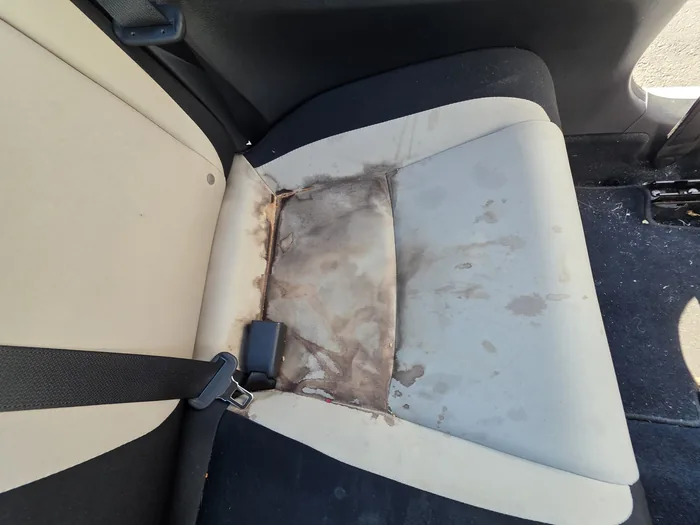
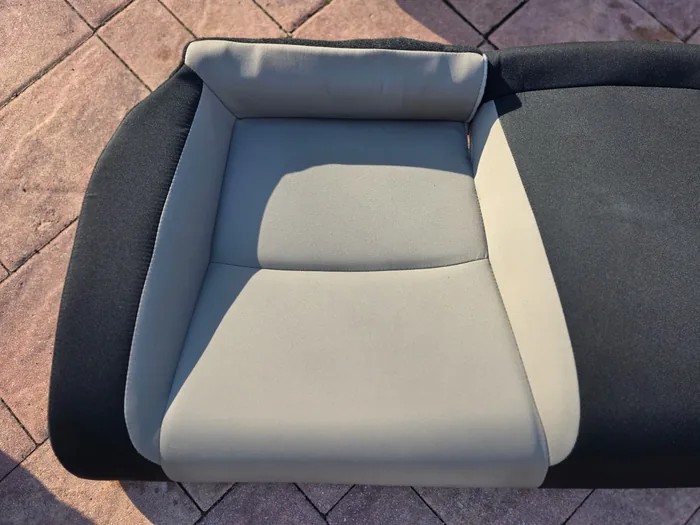
Nobody publishes a child seat policy, so here is ours. If the seat stays in, we clean every surface around it and under the base as far as the vacuum and steam wand reach. If you want the seat and the fabric underneath fully cleaned, take the seat out before we arrive and put it back yourself afterward, because the person who reinstalls a child seat should be the person responsible for the child’s ride. The American Academy of Pediatrics gives the two checks: the seat should not move more than an inch side to side or front to back at the belt path, and the recline angle must be right so a baby’s head does not flop forward. Photograph the installed seat from a few angles before you remove it so you can match it. Suffolk County runs free car seat checks through the Governor’s Traffic Safety Committee if you want a certified technician to look at the reinstall.
Where to Park: Driveways, Office Lots and Apartments
We bring our own water and power, so the only things we need from the location are room and permission. Room means the van next to your car with every door, the hood and the trunk able to open fully, roughly a two space footprint. Flat and shaded beats sloped and sunny, because sealant and glass cleaner flash off too fast on a hot panel. If two cars share the driveway, move the other one the night before.
Office lots work well; Brett’s January 2026 review says “They came to my job, my car looks brand new,” and Ashley wrote that having the wash done while she was at work “was fantastic.” Ask your office manager or building security first, since the lot belongs to someone, then pick an end of row spot with space on both sides and stay reachable by text.
Apartment lots and condos are case by case: whether the landlord or HOA allows washing on the property, and whether there is a spot we can occupy for two to three hours without blocking anyone. If you are unsure, send us a photo of the spot and we will tell you before you book. The runoff and permission questions are covered in our guide to what you need to provide for a mobile detail.
Arrival: Why Later Appointments Get a Window
Ten of our hundred most recent Google reviews use the words “on time” or “punctual” unprompted, and here is how the day runs to keep it that way. The first appointment of the day is a time. Every one after it is a window, because the job before yours can run long for reasons we only discover when we open the door, and because Long Island distances add up: Islip Terrace to Huntington is about 25 minutes on a good day, and a North Shore morning plus the drive back eats most of an hour.
What you should expect from us is a text when we are on the way with a real estimate, and another if that estimate changes. The complaint we see most in reviews of other mobile detailers is not lateness itself but vague lateness: one Trustpilot reviewer described being told “5 minutes late,” then “20 minutes,” then waiting 30. If you have a hard stop, say so at booking and we will put you first in the day.
The Walk Around and What Cannot Be Fixed
Before any water touches the car, we walk around it with you (or on video if you are not there) and point out what is already there: scratches that catch a fingernail, curb rash, chips, stains, odors, cracked plastic. That way the final walk around compares against a known starting point rather than a memory.
It is also where we tell you what will not come out, because some things do not. Scratches deep enough to catch a nail are below the clear coat and need paint, not polish. Water spots that have etched into glass or paint over a summer need machine work, and sometimes do not fully leave. Dye transfer from jeans on light leather, stains that have been baked in for years, smoke that has soaked into foam under the fabric, and the fading of a sun bleached dashboard all have limits. Our terms promise that we tell you before we start if we expect a limit, and Joanne’s July 2026 review is what that sounds like in practice: “Christian was very clear on what he could do for what my budget was … It is an older Jeep that has been neglected for years, so I wasn’t expecting a miracle.” She gave five stars because the expectation matched the result.
The Work, Stage by Stage
There is no single correct order for a detail, but there is a logic: wheels before paint because brake dust splashes, interior early so extracted seats dry while the exterior is done, glass and a second vacuum last because everything before them leaves dust and mist. Here is a Signature Detail on a sedan as seen from your kitchen window.
| Stage | What is happening | What you will notice |
|---|---|---|
| Walk around | Existing damage noted, trouble spots and limits discussed, key handed over | 5 to 10 minutes of conversation |
| Setup | Van parked beside the car, generator and water tank connected, runoff kept off the storm drain | Generator noise starts; it runs most of the appointment |
| Interior strip | Mats out, trash out, compressed air into vents and seams, full vacuum including under seats and seat rails | Doors open, air compressor bursts |
| Interior deep clean | Steam on vents, plastics, jambs and seams; pre treat stains; extraction on Interior Refresh and Elite; leather cleaned and conditioned | Steam from the open doors, a wet carpet smell that fades within hours |
| Wheels and tires | Separate buckets and brushes, wheel wells rinsed, tires scrubbed | Pressure washer, the loudest 15 minutes of the day |
| Exterior wash | Pressure rinse, foam, two bucket hand wash top to bottom, rinse | A wet driveway; the water is ours, not yours |
| Decontamination | Iron remover sprayed, dwells 2 to 5 minutes and turns purple as it dissolves brake dust, rinsed off | A sharp chemical smell for a few minutes, then purple streaks running off the paint |
| Dry and protect | Microfiber and blower dry, sealant applied, tire dressing, trim dressed | Blower noise; this is why shade matters |
| Finish | Inside and outside glass, second vacuum of anything tracked in, mats back in once dry | Quiet; the last 15 minutes |
| Final walk around | You check the car with us before we pack up | Total elapsed: about 2.5 hours on a sedan |
Larger vehicles add time at every stage rather than at one, which is why the SUV and truck add ons are flat amounts rather than guesses: a Signature is $325 on a sedan, $375 on an SUV and $425 on a truck. Chemical Guys’ time guide puts the same thing in industry terms: full size trucks and SUVs add 30 to 60 minutes per major stage, and a neglected interior alone can run “two to four hours minimum.” Nik’s June 2026 review (“after 3 moves, pet hair, etc. … finished everything within 3hrs”) is what the top of our range looks like.
The Final Check: Where to Look
Our guarantee is simple: tell us before we leave if anything looks wrong and we make it right on the spot. That only works if you look, so here is where, built from our own two four star reviews. One, in July 2025, wrote that he “would’ve done more thoroughly” the rails the front seats slide on and the windows; the other, in February 2026, noted we forgot the tire dressing on a 29 degree day. Both are now named lines on our checklist.
- Slide each front seat all the way forward and look at the rails and the floor behind them.
- Open the trunk and lift the floor to the spare tire well.
- Run a finger along a vent slat and inside a cupholder.
- Check door jambs, all four, and the sills under them.
- Look through the windshield from inside, toward the sun, for streaks.
- Walk the paint in the shade and look for water spots on the glass and chrome.
- Confirm the tires are dressed and the mats are back in and dry.
Notice a missed spot after we have left? Call or text and we come back and look.
Payment, Tipping and the First Few Days After
You pay after the work is done, by the methods we confirm with you when we confirm the appointment, and the price is the one you saw at booking unless we agreed on something at the walk around. There is no deposit. Several Long Island detailers take 25 percent at booking with a 48 hour refund window; we do not. A tip is never expected and never built into the price; if you want to leave one, it goes to the person who did the work. The full price list and the sales tax that applies in Suffolk County are in our Long Island detailing cost guide.
After we leave, the car is drivable immediately. What needs a little care is the protection that was just applied, and the numbers come from the product makers rather than from us.
| Protection applied | Keep dry for | No soap or chemicals for | Source |
|---|---|---|---|
| Wax or synthetic sealant (every detail package) | A few hours, ideally overnight | Not required; wash normally after a day | Collinite and Meguiar’s product guidance: cure “varies greatly with temperature and humidity” |
| Ceramic coating (shop only) | 24 hours; wipe water off gently if it gets wet | 5 to 7 days | CarPro CQuartz UK 3.0 instructions; Gtechniq advises 7 days |
| Window tint (shop only) | Do not roll the windows down for a few days | Ammonia free glass cleaner only | Our pickup instructions, given with every tint job |
| Extracted seats and carpets | Damp for a few hours; crack the windows, run the fan | Nothing to avoid | Our own experience; drying time rises with humidity |
A sealant going on at 2 PM with rain at 6 is fine; the same sealant at 5 PM is not, and we will say so. Coatings and tint are shop only partly for this reason: cure time and dust control are not things a driveway can promise.
Rain and Rescheduling
Plans change, and our terms say what we mean: call or text as early as you can so the slot can go to someone else. There is no cancellation fee. For weather, we make the call the morning of, by text. Light drizzle is workable for interior work and a wash; steady rain is not, because you cannot dry and seal a car that is being rained on, and we reschedule rather than deliver half a job. An appointment at the shop in Islip Terrace is never weather dependent, which is one reason the drop off option exists at the same price.
How we know this: the booking steps, prices, hours and policies are taken from our live booking system and our terms as of October 2026; the industry durations, child seat checks and cure times are linked to their sources above; the Long Island competitor policies were read from their published pages on October 11, 2026; every customer quote is from a public Google review.
Do I need to be home for a mobile detail?
No. Many customers have the car done while they are at work. We need the key, a spot with room to open every door, permission to work there, and a phone number that answers texts. The walk around at the start and the final check at the end can both be done by video if you are not there.
How long will the appointment take?
About 2 hours for an Essential Detail, 2.5 for a Signature and 6 for an Elite on a sedan; SUVs and trucks add time at every stage. Heavy pet hair, sand or a neglected interior can push a Signature toward 3 hours, which is why we ask about the car’s condition when you book.
Do I have to take out the child seat?
Only if you want the seat and the fabric under it fully cleaned. If it stays in, we clean around and under it as far as the tools reach. If you remove it, reinstall it yourself and check that it moves less than an inch at the belt path; Suffolk County offers free certified car seat checks if you want it verified.
Will you text me when you are on the way?
Yes. The first appointment of the day is a set time; later ones are a window because the job before yours can run long and Long Island drives add up. We text when we leave the previous job with a real arrival estimate, and again if it changes. Tell us at booking if you have a hard stop and we will schedule you first.
What if you find something you cannot remove?
We tell you at the walk around before we start, not after. Scratches that catch a fingernail, etched water spots, dye transfer on light leather, years old stains and smoke soaked into seat foam all have limits. If we expect one, you hear it first and decide whether to proceed.
When do I pay, and is there a deposit or cancellation fee?
No deposit and no cancellation fee. You pay after the final walk around, by the methods we confirm when we confirm your appointment. If you need to cancel or move the appointment, text or call as early as you can so the slot can go to someone else.
How soon can I drive the car, and when can I wash it again?
Immediately after any detail package. Give a fresh wax or sealant a few dry hours before rain and wash normally after a day. A ceramic coating from the shop needs 24 hours dry and 5 to 7 days with no soap or chemicals, and freshly tinted windows stay up for a few days.
If you are ready to book, the detailing packages page lists every tier with the SUV and truck add ons, and you can book an appointment online in a few minutes for your driveway, your office lot or the shop at 170 Garfield Avenue in Islip Terrace. If the inside of the car is the main problem, the full detail page explains what the interior work covers, and if you would rather talk it through first, call or text (631) 859-7515. Hablamos español.
Ceramic Coating vs Wax: What Is the Real Difference?
A layer of spray wax or sealant on a car measures 4.5 to 7.8 nanometers thick in the only peer reviewed measurement we could find; a professional ceramic coating goes on at 1 to 2 microns per coat, which is 130 to 440 times thicker. That number explains the difference: wax is a sacrificial film gone in weeks, a coating is a cured glass like layer that lasts years. It does not say whether you should buy one. A coating is $699 to $1,399 at our shop, a sealant is included in a $239 Exterior Shine, and the right answer depends on how long you keep the car, whether it is leased, where it parks, and whether the paint underneath is worth protecting yet.
Jump to a Section
- ›Four Kinds of Protection, Not Two
- ›Thickness, Chemistry and Why Wax Melts
- ›What 9H Means and Does Not Mean
- ›What a Coating Actually Does for You
- ›How Long a Coating Really Lasts
- ›The Warranty Fine Print
- ›Long Island Prices and the Five Year Math
- ›Correction Is the Real Cost
- ›Why Coating Is Shop Only on Long Island
- ›When Wax Is the Smarter Buy
Four Kinds of Protection, Not Two
“Ceramic vs wax” is the question people type, but the market sells four things, and the two in the middle are where most of the value lives.
| Tier | What it is | Typical life | Applied where | At Guinea Pig |
|---|---|---|---|---|
| Carnauba wax | Natural palm wax, hand applied | 4 to 8 weeks | Driveway or shop | Hand applied finishing wax in Paint Correction & Wax (from $799) |
| Synthetic sealant | Polymer film, hand applied | 3 to 6 months | Driveway or shop | Exterior Shine ($239); hand applied sealant |
| Spray ceramic or graphene sealant | SiO2 or graphene spray, wiped on | 6 to 12 months | Driveway or shop | Graphene Seal add on ($59), rated 6 months or 30 washes |
| Professional ceramic coating | Cured silica layer over corrected paint | 2 to 7 years by tier and care | Shop only | 3 Year $699, 5 Year $899, 7 Year $1,399 |
The third tier is the one most people have never been offered. Britain’s Auto Express left a dozen spray ceramics on a scrap hood outdoors for six months with basic shampoo washes every few weeks, and its 2026 winner cost about £40; a £9 product “wasn’t far off the best,” and a carnauba wax with ceramic additives rated for four months “was outperforming many of them at the end.” That is why our Graphene Seal is $59 rather than $300, and also why a spray is not a coating: the same test found “even the best were shifting water more slowly than in the first few weeks,” and some had disappeared.
Thickness, Chemistry and Why Wax Melts
Carnauba wax comes from the leaves of a Brazilian palm and melts at 180 to 187 degrees Fahrenheit. A dark hood in July sun can exceed that, so the wax softens and migrates long before it “wears off,” which is why the honest carnauba figure is weeks, not months.
Thickness is the fact nobody in this business cites. Researchers at the University of the West of Scotland measured four spray waxes and sealants with ellipsometry after application per the label and published the results in Acta Physica Polonica A (2009): residual films of 44.9 to 77.6 angstroms, which is 4.5 to 7.8 nanometers, with water contact angles from 71 to 95 degrees. CarPro states its CQuartz UK 3.0 coating at “1~2 micron per coat,” 70 percent silica, with a 110 degree contact angle and 2 to 5 years of durability. A micron is a thousand nanometers; paste waxes were not in the study and likely leave a thicker film than sprays, but nothing close to that.
Contact angle is the number behind “beading.” Above 90 degrees a surface is hydrophobic; wax sprays land around that line, coatings at 110 to 118 degrees, and the better ones advertise a low sliding angle so water runs off a parked car instead of drying into a spot. No car product reaches the 150 degrees chemists call superhydrophobic, whatever the label says.
What 9H Means and Does Not Mean
Our old version of this post repeated the line that “9H is roughly Mohs 2 to 3.” That conversion is folklore. The H scale is pencil hardness, an ASTM test in which a technician drags pencils of increasing hardness across a coated panel until one scratches; IGL Coatings explains that the test starts at 10H and steps down, and that it is “just one of the many different tests” a coating faces. Mohs is a mineral scale. They do not convert.
FeynLab’s chemist goes further in an article titled “Am I being fooled?“: a coating a few microns thick cannot resist a pencil on its own, so the test mostly measures the panel underneath, and lab certifications typically use coated steel plates, which return 9H, the maximum the standard allows. His tell: a true 9H surface would scratch glass, and your coated hood can be marked with a fingernail. What a coating resists is wash marring and chemicals, not keys, rock chips or a tunnel brush. A Tesla forum member with years of coated cars put it plainly: “it is in no way scratch proof … The key is prep.”
What a Coating Actually Does for You
Three things. Washing gets easier and safer: dirt sits on the slick surface rather than bonding to it, so the paint picks up fewer swirls over a year of washes. Chemical attacks get time: bird droppings run a pH of about 3 to 4.5 and can etch bare clear coat in minutes on a hot day; on a coating they sit on top for hours, though not days. And gloss holds, because UV and oxidation work on the coating rather than the clear coat.
What it does not do is the list from the forums. It does not add measurable resale value. It does not keep the lower body clean (“your car still gets dirty below the waistline”). It does not stop chips, which is paint protection film’s job, a product we do not sell. And it does not make water spots impossible; an Autogeek member hosed bird droppings off a freshly coated car, let it air dry, and ended up with “water spots all over my car.” A coating buys time against contamination. It does not replace drying the car.
How Long a Coating Really Lasts
The number on the package is a warranty term, not a promise of day one beading for that many years. Owners who have been through several coatings are consistent about this. On Autogeek, a long time member wrote in 2023: “My general rule of thumb is I don’t go more than 2~3 years on any coated vehicle before I polish it off and re-apply … at the three year point you can tell it’s time.” Another owner reported a coating applied “4-5 years ago … car still beads to this day.” Both are true: the coating is there at five years, and it stopped performing like new around year three. The maker of the coatings we use, Artdeshine, recommends a maintenance spray every six months, which is what keeps the top of the curve up.
Long Island shortens the curve in specific places: winter brine on rockers and lower doors, where every coating wears first; oak pollen in April and May, which rinses off a coated surface and sits on bare paint; and a UV index that hit 9 on June 30, 2026. Cars that live outdoors near the South Shore should expect the lower end of any rating, garaged cars inland the upper end.
The Warranty Fine Print
Most professional coatings carry a manufacturer warranty that few people read. One readable example, NANOLAB, requires weekly washing with pH neutral shampoo and microfiber, professional maintenance twice a year, contaminants removed “within 12-24 hours,” a record of wash and maintenance services for any claim, and states that “failure to adhere to the maintenance schedule will void the warranty.” Exclusions run to “minor scratches and swirl marks” and “extreme UV exposure.” A detailer’s guide to coating warranties lists what typically voids them across brands: automatic brush washes, dish soap or degreasers, letting bird droppings sit, pressure washing at point blank range, missing inspections, and failing to register. The remedy, when a claim is honored, is almost always a reapplication, not a refund.
So a “7 year” coating is a 7 year warranty on a product that will perform best for two to three years and acceptably after that, provided you wash it every week or two, top it twice a year and never run it through a brush tunnel. If that routine sounds like more than you will do, buy the cheaper tier, or buy a sealant.
Long Island Prices and the Five Year Math
We read the published ceramic prices of six Nassau and Suffolk shops on October 11, 2026; several of the biggest publish none. The spread is wide because the correction underneath varies more than the coating. A Westhampton film shop lists an entry coating at $599 for a car and $799 for a truck, rising to $1,999 to $2,499 with heavy correction. A Bayport detailer lists a 3 year single layer at $1,395 to $1,595 and a 5 year double layer at $1,795 to $1,995, tax included. A Merrick mobile coater lists $850 to $1,500 with correction from $600. A New York City directory puts the range at $500 to $800 for prep only, $1,000 to $1,500 with single stage correction, and $1,500 to $2,500 and up for multi layer packages.
| Service | Sedan | SUV | Truck or large SUV | What it includes |
|---|---|---|---|---|
| 3 Year Ceramic (Artdeshine Graphene Hybrid+) | $699 | $899 | $1,099 | Paint, trim and wheel faces; rated 2 to 3 years, 15,000 miles |
| 5 Year Ceramic (Artdeshine Ayicon Pro+) | $899 | $1,299 | $1,499 | Our most requested tier; rated 5 years, 40,000 miles |
| 7 Year Ceramic (Artdeshine NGC+) | $1,399 | $1,599 | $1,799 | Foam wash, multi stage decontamination, light paint correction; paint, wheel faces, plastics, front windshield |
| Elite Detail (single stage polish, coating prep) | $525 | $605 | $675 | Mobile or shop; the correction most cars need before the 3 or 5 Year tier |
| Exterior Shine (hand applied sealant) | $239 | $269 | $299 | Mobile or shop; 3 to 6 month protection |
| Graphene Seal add on | $59 | $74 | $79 | 6 months or 30 washes; the maintenance topper for coated cars |
The five year comparison, using only those figures. Sealant route: an Exterior Shine two or three times a year is $2,390 to $3,585 over five years. Coating route: a 5 Year Ceramic at $899 plus a $59 Graphene Seal topper twice a year is $1,489. Both still need the same washes. The coating wins if you keep the car five years and keep up the toppers; the sealant wins if you keep it two, and the break even on a sedan is roughly year two to three. Sales tax: detailing and coating are taxable in New York, so add 8.75 percent in Suffolk County to every number above, a point covered in our Long Island detailing cost guide.
Correction Is the Real Cost
A New York Audi owner pricing a coating got the best one line summary of this business from another forum member: “any detailer who quotes a ceramic coating package that doesn’t include paint correction should be ashamed.” A coating is clear. It locks in whatever is under it, swirls included, for years, and cannot be polished without removal. The gloss in a coated car’s photos comes from the correction, not the bottle, which retails for $115 to $160; the price of a coating is labor on the paint. Our 7 Year tier includes a light correction; the 3 and 5 Year tiers assume paint in good condition or an Elite Detail first, and we tell you at the walk around which one your car needs rather than coat over swirls.
This is also the difference between a detailer’s coating and the “ceramic package” on a dealer’s finance menu, which owners on truck and Tesla forums call “almost 100% profit” and applied without correction. A coating with documented prep, applied in a shop at a published price, is a different product with the same name.
Why Coating Is Shop Only on Long Island
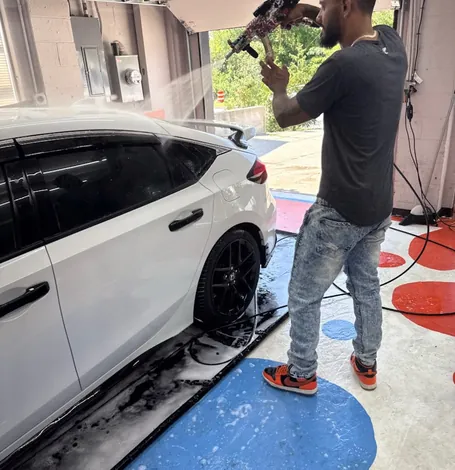
We wash and detail in driveways year round, including one customer’s car at 29 degrees in February 2026. We do not coat in driveways at all, and the reason is in the product sheets. CarPro specifies 40 to 90 degrees for application and a dry surface for at least an hour, ideally 24. Gtechniq’s Crystal Serum Light specifies 5 to 25 degrees Celsius, 41 to 77 Fahrenheit, and that the car be “indoors and can stay indoors for 12 hours after application.” Dr. Beasley’s says a coating “simply will not bond properly under 50°F,” and that cold air’s humidity “can trap moisture under the coating and cause haze, streaking, or early failure.” Installer guidance is 60 to 75 degrees indoors, humidity under 50 percent, and no washing, rain or road salt for seven days.
Islip’s mean high is 39 degrees in January and 44 in December, so every one of those products is out of its window outdoors for a third of the year, and dust control in a driveway is impossible in any month. So ceramic coating is done at 170 Garfield Avenue, takes most of a day, cures for 7 to 14 days, and you pick the car up with written care instructions. A sealant, by contrast, is a 2 hour mobile job from April to mid November and shop work in the cold months; the full calendar is in our post on how often to detail a car on Long Island.
When Wax Is the Smarter Buy
There are real cases where we will talk you out of a coating.
- A lease. Forum advice is nearly unanimous and we agree: “If you’re leasing and giving it back, I wouldn’t ceramic coat it.” A $59 Graphene Seal twice a year does the job for the term of the lease.
- You keep cars two years or less. The math above never reaches break even.
- The paint is already swirled and you do not want to pay for correction. A coating would seal the swirls in. An Elite Detail polishes them out and a sealant protects the result for a season; decide about coating next spring.
- You will not keep up the washes. A coating that goes through a brush tunnel every two weeks is a voided warranty on a car that looks uncoated.
- You like the ritual. A Saturday wax is a hobby, and a hobby is not a cost.
The case for a coating is the mirror image: you keep cars five years or more, the car lives outside, you wash it every week or two anyway, and you want that washing to be easier and safer for the paint. For that owner the 5 Year Ceramic at $899 is the best value in our catalog, and the wash it needs afterward is the same hand wash we do for everyone else.
How we know this: the film thickness and contact angle figures are from the 2009 Acta Physica Polonica A study; coating specifications are from CarPro, Gtechniq, Adam’s, IGL and FeynLab; durability tests are Auto Express; warranty terms are quoted from published programs; competitor prices were read from six Long Island shops’ published pages on October 11, 2026; Guinea Pig prices are the live booking catalog as of October 2026; and the owner quotes are from public forum posts, linked above or named by forum and date.
Is a ceramic coating just an expensive wax?
In function, it is a wax that lasts years instead of weeks: easier washing, fewer swirls from washing, time against bird droppings and UV. In substance it is different, a cured silica layer 1 to 2 microns thick versus a wax film measured at 4.5 to 7.8 nanometers. It is not armor; it will not stop chips or keys.
Should I ceramic coat a leased car?
No. You will not keep the car long enough to reach break even, and the paint correction is the expensive part. A Graphene Seal add on at $59, reapplied every six months, gives a leased car the washing benefits for the length of the lease.
What does 9H actually mean?
It is the top of the pencil hardness scale, a test that drags graded pencils across a panel. On a film a couple of microns thick the test mostly measures the panel underneath, which is why lab certifications use steel plates. It does not convert to the Mohs mineral scale, and a 9H coating can still be marked with a fingernail.
Why did my coated car get water spots?
Because minerals in water dry on a coating the same way they dry on paint. The usual story is a hose rinse that was allowed to air dry. A coating gives you hours against contaminants, not days; rinse, then dry with a towel or blower, and remove bird droppings within a day.
Can I take a coated car through an automatic car wash?
Brush tunnels are the first item on most coating warranties’ list of what voids coverage, and they put in the swirls the coating was meant to prevent. Touchless washes are less harmful but their strong chemicals shorten the coating’s life. A two bucket hand wash every week or two is what every coating maker specifies.
Do I need paint correction before a coating?
Almost always, unless the car is new or recently polished. A coating seals in whatever is under it for years and cannot be polished without removal. Our 7 Year tier includes a light correction; for the 3 and 5 Year tiers most cars need an Elite Detail ($525) first, and we tell you which at the walk around.
If you want a straight answer for your car, tell us the year, how long you plan to keep it, and where it sleeps, and we will say coating, sealant or wax without a pitch. The ceramic coating page lists all three tiers with SUV and truck add ons, the detailing packages page covers the Exterior Shine and Elite Detail that the sealant and prep routes use, and you can book an appointment online for the shop in Islip Terrace or, for anything but the coating itself, your own driveway.
How Often You Should Detail Your Car on Long Island
Islip gets measurable rain or snow on about 122 days a year, one day in three, and the two wettest months are December and March, which are also the two months the Town of Islip’s brine trucks are busiest. That is the whole reason a Long Island car needs a different schedule from the one in the owner’s manual. The short version for a daily driver here: a hand wash every 7 to 10 days from the first brine of December through March and every 2 to 3 weeks the rest of the year, a sealant every 3 to 4 months, and a full interior and exterior detail two to four times a year. The rest of this post shows where those numbers come from, what each season actually throws at the paint, what neglect costs in real dollars, and how the schedule changes for dog owners, beach regulars, work trucks, rideshare cars and leases.
Jump to a Section
- ›What the Owner’s Manual Says vs What Detailers Say
- ›The Islip Calendar, Month by Month
- ›Salt Season Starts Before the First Snow
- ›Salt Air Is a Few Hundred Meter Problem, Not an Island Wide One
- ›What Neglect Costs
- ›Schedules by How You Use the Car
- ›Leased Cars: The Credit Card Rule
- ›Signs the Car Is Telling You, Not the Calendar
- ›Which Package Fits Which Visit
What the Owner’s Manual Says vs What Detailers Say
Start with the floor. The Kia owner’s manual tells you to wash the car “at least once a month,” to “hose off the underside of your vehicle at least once a month” in winter, and to wax “when water will no longer bead on the paint.” Hyundai’s manual says the same, almost word for word, and both list “road salts” and “ocean air” as causes of accelerated corrosion. Nissan’s manual calls de-icing chemicals “extremely corrosive” and says to wash salt off “as soon as possible.” That is the manufacturer’s minimum, written for the whole country.
The detailer consensus sits higher. Consumer Reports’ Jon Linkov told ABC7 that washing “is not about doing it on a schedule,” it is about washing when mud, salt and grime appear, with an undercarriage wash once a season, and Consumer Reports has separately put hand waxing at three to four times a year because even good waxes only last a few months. Working detailers on Autogeek describe weekly washes, interior cleaning monthly, and sealant or wax every four weeks to three months. The honest range, then, is monthly at the floor and weekly at the ceiling, and Long Island’s climate is the reason to sit toward the ceiling from December to March.
The Islip Calendar, Month by Month
These are the National Weather Service 1991 to 2020 normals for Long Island MacArthur Airport in Islip, which is the closest official station to most of the towns we serve. The last column is what each month does to a car that lives outside.
| Month | Mean high / low °F | Precipitation, in | Snow, in | What hits the car | Wash interval |
|---|---|---|---|---|---|
| Dec | 44 / 30 | 4.7 (wettest) | 4.5 | First brine, re-wetted by rain | 7 to 10 days |
| Jan | 39 / 25 | 3.7 | 10.3 | Salt, slush, plow grit | 7 to 10 days |
| Feb | 41 / 26 | 3.3 | 9.4 | Salt, lowest temps | 7 to 10 days |
| Mar | 48 / 32 | 4.5 | 6.5 | Last salt, maple and birch pollen begins | 7 to 10 days, then underbody flush |
| Apr | 58 / 41 | 4.1 | 0.6 | Oak pollen peak | 2 weeks |
| May | 68 / 51 | 3.3 | 0 | Oak and grass pollen, first bird season | 2 weeks |
| Jun | 77 / 61 | 4.0 | 0 | Grass pollen peak, UV reaches 8 or 9 | 2 to 3 weeks |
| Jul | 83 / 67 | 3.3 | 0 | Peak UV, beach sand and salt, humidity | 2 to 3 weeks, same day after the beach |
| Aug | 81 / 66 | 4.2 | 0 | Same, plus afternoon storms | 2 to 3 weeks |
| Sep | 75 / 59 | 3.6 | 0 | Ragweed, mold spores after rain | 2 to 3 weeks |
| Oct | 64 / 47 | 4.0 | 0 | Leaf tannin stains, sap | 2 weeks, leaves off within a day |
| Nov | 54 / 38 | 3.4 | 0.5 | Late leaves, first frost, pre winter sealant window | 2 weeks, then seal before December |
Two things stand out. Precipitation is nearly flat across the year, 3.3 to 4.7 inches every month, so there is no dry season where the car can be ignored. And the snow is a December through March event (30.7 of the 31.8 annual inches), which means the salt window is a tight four months and the pre winter sealant has one obvious slot: November, when the mean high is still 54 degrees and the panel is warm enough for the product to bond.
Salt Season Starts Before the First Snow
Most people think salt season begins with the first plow. It begins with the first forecast. The Town of Islip’s Highway Division runs two brine making facilities and pretreats roads before storms; Patch reported crews “spreading brine on town roads” the day before a January 2019 storm. Brine is roughly 23 percent salt, it is sprayed as a liquid, and it atomizes onto rocker panels, lower doors, wheel wells and the underbody as you drive through it. It also clings in a way rock salt does not; AAA’s de-icer fact sheet warns that liquid de-icers are harder to rinse off and recommends washing the undercarriage frequently through winter and once more in spring.
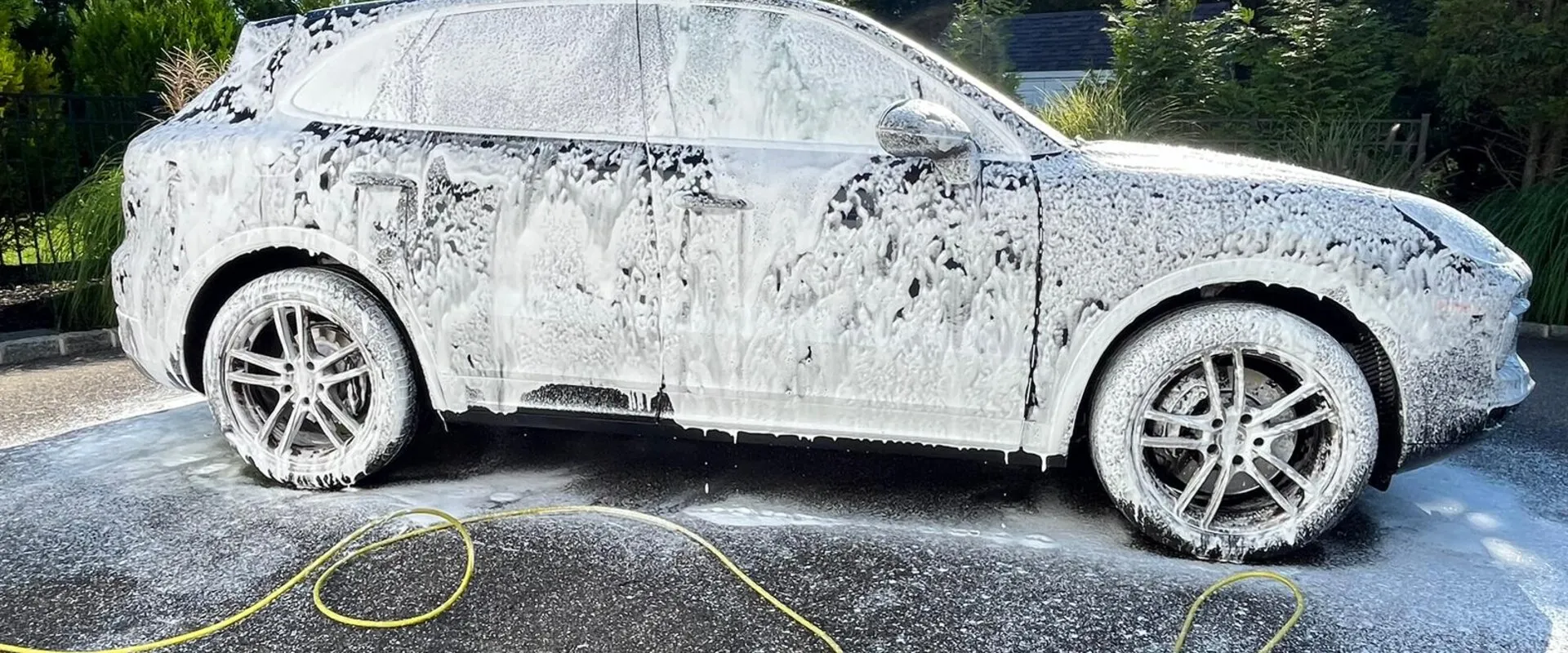
December being the wettest month makes it worse. Rain does not wash salt off a car; it dissolves the salt in the wheel wells and re-wets it, which is when corrosion happens. A Long Island mechanic told News 12 after the February 2026 storm that the weather “is the worst thing for these cars,” and a local car wash owner put the rule simply: “The sooner you get the salt off, the sooner you prevent corrosion.” That is where our 7 to 10 day winter wash interval comes from, and why every winter wash we do includes the wheel wells and the underside, not only the paint. Washing at 29 degrees is possible with the right process; one of our February 2026 customers noted we got his car “95% clean when it was 29 degrees outside,” and the missing five percent was the tire dressing, which does not set in that cold.
Salt Air Is a Few Hundred Meter Problem, Not an Island Wide One
Every detailer on Long Island, including us until this rewrite, has described the whole island as a salt bath. The measured research says otherwise, and it is worth getting right because it changes who needs the extra washes. A 1999 study in the journal Corrosion by Feliu, Morcillo and Chico, “Effect of distance from sea on atmospheric corrosion rate,” found that marine effects extend “principally some few hundred meters from the shoreline” and decay rapidly further inland; the U.S. Naval Research Laboratory describes corrosivity as worst at the surf zone, dropping sharply over hundreds of meters, then tapering more slowly.
In practice that means the waterfront blocks of Bay Shore, Islip, East Islip, Sayville, Babylon, Lindenhurst and Patchogue, the barrier beaches, and any car that spends the day in a Robert Moses or Jones Beach lot with the windows down. A car garaged three miles inland in Islip Terrace or Brentwood is not in the salt air zone in any meaningful sense, and its real enemies are the ones on the calendar above: brine, pollen, UV, birds and leaves. If you park at the beach regularly, treat each beach day like a winter week: wash within a day, including the underbody, and vacuum the sand before it works into the carpet. Charlstie’s August 2026 review, “Sand everywhere, stains I honestly thought would never come out,” is what a summer of skipping that looks like, and also what an Interior Refresh fixes.
What Neglect Costs
The argument for a schedule is cheaper than the argument against. AAA’s 2017 survey found that 15 percent of drivers in winter climates had paid for salt related rust repair at least once in five years, averaging 1.5 repairs at $490 each, with the damage concentrated in brake lines, fuel tanks and exhaust systems; nationally that came to more than $3 billion a year. Body rust costs more than the mechanical kind: a New Hampshire Tahoe owner posting on a model forum in May 2025 got first quotes of “$2000 to 4500” for bubbling rear wheel arches. Clear coat failure is the other big bill; the insurance comparison site Jerry, citing AAA, puts a professional respray anywhere from a few hundred dollars for a panel to many thousands for a car, and a 2024 Toyota paint lawsuit estimated repaint costs at around $6,000.
Set those against the maintenance side. A hand wash is about 20 to 30 minutes on a sedan. An Essential Detail is $199, a Signature Detail $325, and an Elite Detail with a single stage machine polish, the tier that removes swirls while the clear coat is still thick enough to polish, is $525. A Paint Correction & Wax service starts at $799. Every one of those is less than one wheel arch, and the full price list with SUV and truck add ons is in our Long Island detailing cost guide.
Resale is the quieter number. Kelley Blue Book’s condition tiers put only about 2 percent of used cars at Excellent and half at Good; Autotrader, using KBB data on a 2019 Subaru Outback, found that moving from Good to Very Good raised the average trade in value by about $700, with a maximum swing near $2,900. Condition is the one value lever an owner fully controls, and it is built over years of washes, not in the week before the sale.
Schedules by How You Use the Car
The calendar above assumes a daily driver parked outside. These are the adjustments for the cars we actually see.
| How the car is used | Wash | Interior | Full detail | What we see most |
|---|---|---|---|---|
| Daily commuter, LIE or Sunrise Highway, parked outside | 7 to 10 days in salt season, 2 to 3 weeks otherwise | Vacuum monthly | Signature every 3 to 4 months | Brake dust and road film bonded to lower panels; iron decon matters |
| Garaged, weekend driving | Monthly, more in pollen months | Every 2 to 3 months | Signature or Elite every 5 to 6 months | Paint stays good; interior dust and UV through the windshield |
| Kids and car seats | Same as commuter | Vacuum every 2 weeks; Interior Refresh every 3 to 4 months | Signature every 3 to 4 months | Crumbs under seats, juice stains, sand; one customer booked a deep clean before a baby arrived |
| Dog rides along | Same as commuter | Vacuum every 2 weeks; Interior Refresh plus pet hair add on quarterly at minimum | Signature every 3 months | Five of our recent reviews are dog hair jobs; matted hair doubles interior time |
| Beach regular, Robert Moses or Jones Beach | Within a day of each beach trip, including underbody | Vacuum after each trip | Interior Refresh at the end of August | Sand in carpet and door jambs, salt film if windows were down |
| Contractor’s truck or work van | Weekly | Monthly | Signature or Elite every 1 to 3 months | Tar, cement and concrete dust; two reviews this summer were cement and tar removals |
| Rideshare or livery | Weekly | Wipe down daily, Interior Refresh monthly | Every 1 to 3 months | Rating and tip pressure; cleaning fee claims cap around $250 |
| Leased, any use | Same as use type | Professional clean within days of any spill | Interior Refresh 30 to 60 days before turn in | The credit card rule, below |
Leased Cars: The Credit Card Rule
Every lender’s excess wear guide draws the same line, and it is not where people think. Toyota Financial Services defines excessive seat and trim wear as “a single cut, tear, burn, or stain greater than the size of a credit card” or an accumulation of smaller ones adding up to that size. BMW centers describe small stains in a few areas as normal wear and “large stains, burns, rips, or water damage” as chargeable. Southeast Toyota Finance and U.S. Bank both separate “removable” stains from stains that “cannot be removed,” and Southeast Toyota’s advice on spills is to have them “professionally cleaned sooner rather than later.”
So the lease schedule is not about frequency. It is about timing: a professional interior clean within days of any spill, while it is still removable, and one Interior Refresh ($259) in the window before the pre inspection, which Toyota runs within 60 days of return and Honda 30 to 45 days before maturity. A consumer group in Canada says lease end appraisals of $800 to $1,500 are commonplace. One stain that crosses the credit card line can cost more than the detail that would have lifted it in April.
Signs the Car Is Telling You, Not the Calendar
Calendars are a backup. The car tells you first, and these are the four signals the manuals and the detailers agree on.
- Water no longer beads on the hood after rain. That is Kia and Hyundai’s exact trigger for reapplying wax, and ours for the sealant step.
- Clean paint feels gritty under a fingertip inside a thin plastic bag. Bonded brake dust and fallout; a wash will not remove it, the iron decontamination in a Signature Detail will.
- A white haze on the lower doors and rockers in January. Dried brine, which keeps pulling moisture out of the air until it is rinsed.
- You can hear sand under the floor mats, or the car smells musty after a humid week. One October 2026 customer had mold return within 24 hours of a quick wipe; it took a proper interior detail with extraction to end it. Long Island summers are humid, so damp carpet and closed windows are a mold recipe.
Which Package Fits Which Visit
A schedule only works if each visit is the right size, and the most common mistake is booking the cheapest wash for a car that needs the interior done; the difference is laid out in our post on what a wash and a detail actually include. For a daily driver on the calendar above: the hand wash is the every 7 to 10 day or every 2 to 3 week visit; the Essential Detail ($199) is the monthly interior reset for a car with kids or a dog; the Signature Detail ($325) is the seasonal visit, with the iron decontamination and steam that a wash never touches; the Exterior Shine ($239) is the November sealant appointment; and the Elite Detail ($525) or full detail page’s higher tiers are the once a year polish that keeps swirls from becoming a correction job.
A ceramic coating stretches the schedule but does not replace it; a coated car still needs a wash every two weeks and a maintenance topper twice a year, and the honest comparison is in our ceramic coating vs wax post. If you want the visits on a standing schedule, our maintenance plan books them every four to eight weeks at the normal package price with no automatic charge. And in October specifically, before any of this, get the leaves off the paint; our post on why fall leaves leave a permanent mark explains why a week is too long.
How we know this: the climate figures are the National Weather Service 1991 to 2020 normals for Islip; the manufacturer intervals are quoted from the Kia, Hyundai and Nissan owner’s manuals; the rust, repaint, resale and lease figures are linked to AAA, Jerry, Autotrader and the lenders’ own excess wear guides; the salt air research is the 1999 Corrosion journal study; our prices are the live booking catalog as of October 2026; and every customer quote is a public Google review.
Does brine hurt my car more than rock salt?
It reaches more of the car. Brine is sprayed as a liquid before storms, so it atomizes onto rockers, lower doors and the underbody rather than sitting in the road, and AAA notes liquid de-icers cling and are harder to rinse. The Town of Islip pretreats with brine from two facilities, which is why our winter wash interval is 7 to 10 days and always includes the wheel wells.
If it rains after I drive on salted roads, did the rain wash the salt off?
No. Rain dissolves the salt in the wheel wells and seams and re-wets it, which is when it corrodes. December is Islip’s wettest month at 4.7 inches, so salt on a car here is almost never dry. Only a pressure rinse of the underbody actually removes it.
How soon after a day at Robert Moses or Jones Beach should I wash the car?
Within a day. Salt air exposure is concentrated within a few hundred meters of the surf, which describes a beach parking lot exactly, and sand in the carpet abrades fibers and door jamb paint every time someone gets in. Wash including the underbody, and vacuum the sand before it works in.
I live a few miles inland in Islip Terrace. Does salt air actually reach my car?
Not in any way that changes your schedule. The measured marine corrosion effect falls off sharply within a few hundred meters of the shoreline. Inland, the things that set your interval are winter brine, spring pollen, summer UV and bird droppings, and fall leaves, all of which are on the calendar above.
How often should I detail a leased car so I am not charged at turn in?
Clean any spill professionally within days, while the lender still counts it as removable, and book an Interior Refresh 30 to 60 days before the lease end inspection. Toyota’s threshold is a stain larger than a credit card; most lenders charge for anything that cannot be removed, and lease end appraisals of $800 to $1,500 are common.
Is it safe to wash a car when it is below freezing?
Yes, with the right process, and in salt season it is more important, not less. We washed a customer’s car at 29 degrees in February 2026 with our own water and dried it immediately; what does not work below freezing is tire dressing and sealant, which wait for a warmer day. Do not do it yourself with a garden hose on a frozen driveway.
If you want us to set the schedule, tell us how the car is used and where it parks and we will tell you honestly which visits it needs and which it does not. The detailing packages page lists every tier with SUV and truck add ons, and you can book an appointment online for your driveway, your office lot, or the shop in Islip Terrace.
